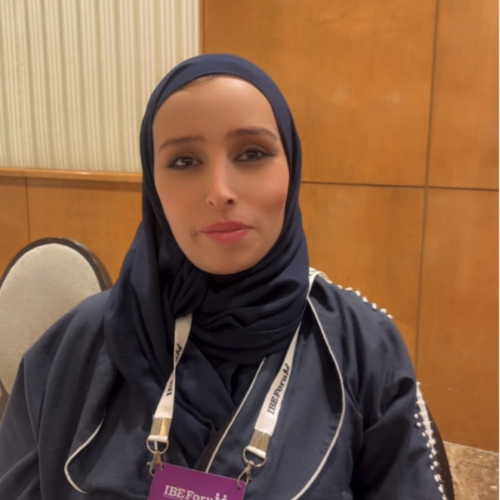
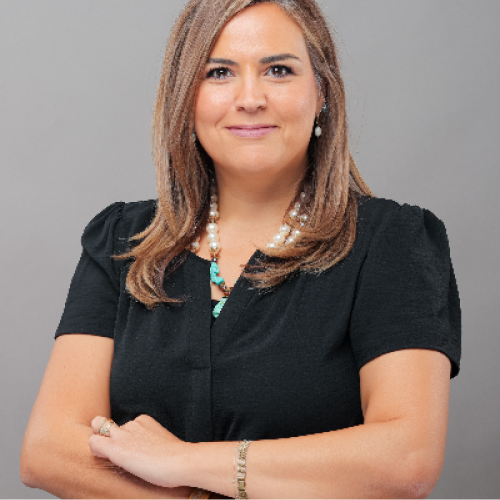
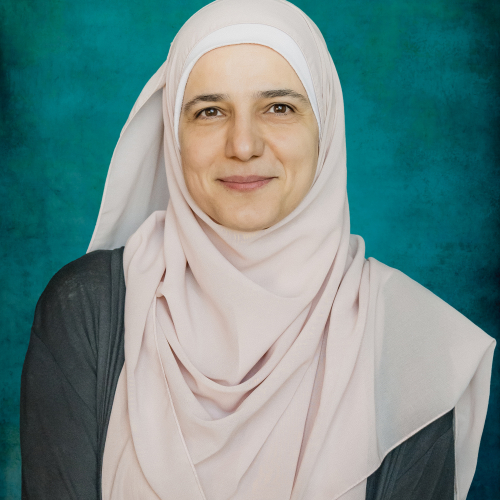
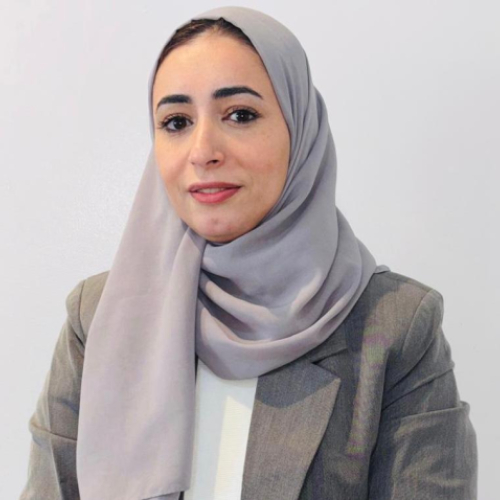
Experience the future of education at GESS Saudi Arabia 2026's EdTech in Action showcase. This dynamic programme brings together global innovators, education leaders, and technology pioneers to demonstrate how artificial intelligence, immersive learning, and digital solutions are revolutionising classrooms across the Kingdom and beyond. Through live demonstrations, interactive case studies, and hands-on experiences, participants will witness cutting-edge educational technologies in real-world applications. This programme aligns directly with Saudi Arabia's Vision 2030 educational transformation goals, showcasing practical solutions that enhance teaching effectiveness, improve student outcomes, and prepare learners for the digital future.
Conference (Conference Session)
-
PedTech: Why EdTech Companies Fail in Schools
Session Summary:
Schools do not buy technology. They buy better learning, better teaching, and better outcomes. Too often, EdTech products are designed around features rather than the daily realities of students, teachers, parents, and school leaders. The result is low adoption, implementation fatigue, and missed opportunities. Drawing on experiences leading AI initiatives, technology integration programs, innovation spaces, and school-wide digital transformation efforts, this session introduces the concept of PedTech: the intersection of pedagogy, implementation, and technology. Participants will explore what schools actually need from technology companies and how a deeper understanding of the education ecosystem can drive meaningful adoption and long-term impact.
Speakers
Clayton Boren
|
Dean of Experiential Learning and Innovation, Deputy Head of School - NEOM
Categories
AI and EdTech
-
Practical AI Tools for Education
Session Summary:
This session explores practical and accessible AI tools that can be effectively integrated into everyday educational practice. Designed for educators, teachers, and academic leaders, this presentation demonstrates how artificial intelligence can enhance teaching and learning without requiring advanced technical skills or extensive training. Participants will discover AI-powered tools that support lesson planning, classroom activities, assessment design, and student engagement through real classroom scenarios and live demonstrations. The session emphasises how AI can save valuable time, support differentiated learning approaches, and encourage active student participation while maintaining focus on sound pedagogical principles. Join this session to:
• Identify practical and user-friendly AI applications for lesson planning, content creation, assessment design, and classroom management that require minimal technical expertise
• Implement AI-enhanced Teaching: Apply AI tools to create differentiated learning materials, generate engaging activities, and streamline administrative tasks while maintaining educational quality
• Practice Responsible AI Use: Develop strategies for ethical AI integration that supports pedagogical goals, protects student privacy, and maintains academic integrity standards
Speakers
Abdullah Alfuraiji
|
Vocational Instructor - Technical and Vocational Training Corporation
Categories
AI and EdTech
-
Tech Audits in Schools – Building Safe, Secure and Future Ready Learning Ecosystems
Session Summary:
With the increasing use of digital technology in schools for teaching, learning, and administration, a safe, secure, and responsible digital environment is essential. A Tech Audit in Schools is a holistic examination that considers not only devices, infrastructure, and digital resources, but also the role of technology in supporting the achievement of educational objectives and the security of students, instructors, and institutional systems. In this workshop, we will examine the importance of technology audits, with an emphasis on cyber safety, data privacy, digital security, and risk management in schools. Topics will cover infrastructure preparedness, cybersecurity measures, data protection standards, access controls, ethical use of digital platforms, online safety guidelines, and compliance with privacy regulations. As schools collect more sensitive student and staff data, data security and the secure use of technology have become vital components of educational leadership. The deliberation will also offer practical frameworks to identify vulnerabilities, implement digital governance, mitigate risks and develop a culture of responsible technology use. Participants will learn how to conduct meaningful technology audits to verify that they are maximising their technology integration and developing secure, ethical, and future-proof learning ecosystems. In today's interconnected society, educational excellence, safety, security and trust are essential.
Responsible AI in Education: What It Actually Means in Practice
Session Summary:
Schools, universities, and learning organisations are adopting AI faster than they can decide what responsible use of it actually means. Most have a policy. Far fewer have a clear practical answer to the questions practitioners are navigating every day: When is it acceptable to use AI to plan a lesson? Generate feedback? Assess student work? Where does support end and substitution begin? What are educators expected to disclose, and to whom? A growing patchwork of guidance, from UNESCO, the US Department of Education, the European Commission, and others, offers principles, but principles do not tell a teacher what to do on Monday morning. The gap between high-level policy and lived practice is where most of the real ethical work in education now sits. This session looks at what responsible AI use actually requires of educators in day-to-day practice. It draws on existing frameworks and policies as reference points rather than blueprints, and turns the conversation toward the practitioner: what counts as appropriate use, what crosses a line, and how do we develop the professional judgment to tell the difference?
A session for school leaders and educators on navigating AI adoption with honesty and intention, moving past both blanket enthusiasm and blanket resistance toward a precise, self-aware relationship with the technology.
Drawing on Rogers' Diffusion of Innovations and Covey's work on trust, the talk opens by showing that AI adoption follows a normal, gradual curve, and that trust, not tooling, determines how fast and cheaply change happens. Its core is a framework adapted from Sean McMinn, PhD (HKUST), and cognitive-offloading research at the University of Queensland, giving leaders a precise way to locate their own AI use on a spectrum from passive reliance to genuine collaborative synergy. Grounded in Carol Dweck's research on growth mindset, it closes with the case that leaders should do this work themselves, visibly, before asking it of their teams.
Designed for school leaders and educators, the session is fast-paced and aims to leave attendees with one specific next step rather than another slogan about AI in education.
Speakers
Logan Birgenheier
|
Head of Project Development - Riyadh Najed Schools Co.
Categories
AI and EdTech
-
Support to Stretch: Technology, Tools, and Scaffolding for Every Learner
Session Summary:
This collaborative workshop brings together four educators to demonstrate how purposeful scaffolding using technology and non-digital tools can simultaneously support SEND learners, stretch gifted students, and engage all learners in mixed-ability classrooms. Through real classroom examples, participants will see how responsive scaffolding meets learners where they are while gradually building independence. The session shows how technology reduces cognitive load and amplifies student voice alongside strong pedagogy and meaningful relationships. Learn how to:
• Design flexible scaffolding by creating responsive support structures that adapt to diverse learners using technology and traditional tools
• Integrate inclusive technology that support all learners while maintaining pedagogical balance
• Differentiate effectively by using scaffolding approaches that simultaneously support and stretch different learners with the same foundational structures
Speakers
Batool Hassan
|
Homeroom Teacher - GEMS Al Khaleej International School
Ratana Nayeck
|
Educator - Muna British Academy, Aldar Education Abu Dhabi
The Human Edge: What Teachers Need to Strengthen in the Age of AI
Session Summary:
AI is taking on more and more of what used to fill teachers’ days: generating practice problems, drafting personalised content, giving instant feedback, and pulling insights from student data. For many teachers, that feels like a threat. The more useful question is what AI now frees teachers to focus on, and which skills matter most to strengthen as routine tasks fall away. AI is not replacing teachers; it is redirecting where their professional value lies. The work AI cannot do is the work that defines great teaching: reading the room, knowing students as people, making judgment calls in the moment, navigating ethical grey areas, and adapting when a lesson is not landing. These are the dimensions of teaching that no system, however intelligent, can take over. This session is intended to open that conversation. It puts the question directly to educators: where do we focus now, what can we comfortably hand off to AI, and what must we deliberately strengthen so that teaching remains a fundamentally human practice in an AI-mediated classroom?
Empowering Teachers to Use AI to Bridge Gaps, Not Widen Them
Session Summary:
Technology is reshaping education, and students with Special Educational Needs and Disabilities (SEND) risk being left behind without intentional, inclusive implementation. This workshop breaks down the four categories of SEND and demonstrates how AI can be strategically used to support different areas of need in personalised and adaptive ways that make learning truly accessible. Participants will explore practical applications and ethical considerations for leveraging AI tools to create equitable learning opportunities rather than widening existing educational gaps. Join this session to:
Understand the four categories of SEND and identify specific AI applications that can support communication, cognition, social-emotional, and sensory-physical needs effectively
Learn to select and deploy AI tools that provide adaptive, individualised support while maintaining pedagogical quality and student agency in learning
Develop strategies for using AI ethically and inclusively to bridge educational gaps, ensuring technology enhances rather than replaces human connection and support for SEND learners
Speakers
Kemi Oluyinka
|
SENCo - Royal Grammar School Guildford, Dubai
Categories
AI and EdTech
-
Building an EdTech-Ready Leadership Team: Roles, Skills, and Structures Schools Actually Need
Session Summary:
Most EdTech rollouts don't fail because of the tool. They fail because no one owns what happens after launch. In this hands-on workshop, school leaders will map their institution against a four-function leadership framework (Translator, Sustainer, Governor, Evangelist) that identifies exactly where ed-tech initiatives quietly stall. Drawing on accreditation-driven institutional design and hands-on program leadership experience across Saudi K–12 schools, this session moves beyond theory: participants leave with a completed, school-specific "Ed-Tech Leadership Map" they can bring directly into their next leadership meeting - no new budget required to start.
Speakers
Dr. Emad Abdou
|
Head of Science & STEAM Activities - Al Motaqdimah International Schools
Categories
AI and EdTech
-
From Struggle to Success: Tech for Learning Difficulties
Session Summary:
This session will explore how innovative technology can transform learning experiences for students with learning difficulties. This practical session demonstrates digital tools, strategies, and techniques that empower students to overcome learning challenges while enhancing classroom engagement and motivation. Discover accessible technology solutions that create personalised learning experiences tailored to diverse learning needs. The workshop emphasises easy-to-implement approaches that support both students and educators in building inclusive, supportive learning environments where every learner can achieve success. Through interactive demonstrations and practical application, attendees will gain confidence in selecting, implementing, and adapting technology tools that address specific learning difficulties while maintaining focus on student empowerment and academic achievement. Join this session to:
• Implement assistive technology solutions, digital tools and platforms that support students with dyslexia, ADHD, autism, and other learning differences in academic settings
• Create personalised learning experiences through individualised technology-enhanced learning pathways that accommodate diverse learning styles, processing speeds, and communication needs
• Enhance student engagement through interactive digital strategies that increase motivation, participation, and confidence among students facing learning challenges
• Support educator implementation to develop skills for selecting, adapting, and integrating accessible technology solutions that are practical and sustainable in diverse classroom environments
Speakers
Dr. Nesrine Merhi
|
Educational Quality Assurance & Continuous Improvement Consultant - Jeddah International School
Categories
AI and EdTech
-
Digital Equity and Inclusive Technology Access
Session Summary:
This panel addresses the critical challenge of ensuring equitable access to educational technology across diverse student populations. As schools increasingly rely on digital tools and platforms, disparities in device access, internet connectivity, and technical support create significant barriers to learning. Panelists will explore strategies for bridging the digital divide, examining successful initiatives that have expanded technology access while addressing socioeconomic, geographic, and cultural factors that impact implementation. The discussion covers funding models, community partnerships, and policy frameworks that support inclusive technology integration. Join this session to:
• Identify access and infrastructure solutions and strategies for providing reliable device access and internet connectivity to underserved student population
• Build collaborative relationships with local organisations, businesses, and government agencies to expand technology resources and support
• Develop sustainable equity frameworks and long-term approaches that ensure ongoing technology access while addressing evolving student needs and technological advancement
Speakers
Aarifa Gora
|
Middle School Educator & AI in Education Strategist - One World International School, Riyadh
Soha Kamel
|
Science Head of department & Gifted Students Program Mahwiba Coordinator - Riyadh Schools Hittin
Mahmoud Amer
|
English Literature Teacher, IELTS & GAT Trainer - Riyadh Schools
Rahma Mohammad AbuDhais
|
Steam and AI Educators and AI Competition Judge - Alforsan International school
Categories
AI and EdTech
-
AI-Powered Personalised Learning: Transforming Education Through Adaptive Technology
Session Summary:
Artificial intelligence is revolutionising education by enabling personalised learning experiences that adapt to each student's unique pace, level, and learning style. This session explores how intelligent platforms are moving education beyond the traditional "one-size-fits-all" model. Through practical demonstrations and evidence-based insights, participants will discover how AI-powered tutoring systems can improve learning outcomes by up to 30% while significantly enhancing student engagement and retention, as supported by McKinsey research. Join this session to:
• Evaluate AI-powered platforms and analyse how adaptive learning technologies personalise student learning pathways and support individualised instruction across diverse classroom settings
• Implement AI tools strategically to integrate AI-driven lesson planning, assessment generation, and differentiated instruction tools
• Leverage data-driven insights to make informed instructional decisions, personalise learning at scale, and measurably enhance student engagement and outcomes
Speakers
Soha Kamel
|
Science Head of department & Gifted Students Program Mahwiba Coordinator - Riyadh Schools Hittin
Teacher and PhD Student, Faculty of Computing and Information Technology, Department of Computer Sciences, King Abdulaziz University, Jeddah, Saudi Arabia